The heart of every home, the kitchen, continues to evolve. In 2026, kitchen design will favour spaces that feel warm yet refined, deeply personal, and genuinely liveable.
According to the National Kitchen & Bath Association’s 2026 Kitchen Trends Report, homeowners want kitchens that work smarter while bringing people together. The trends we’ll see will balance beauty with real-world function, creating spaces that support how families actually live.
Laurysen designers have been tracking these shifts closely. Here’s what’s shaping kitchen design in 2026 and how these ideas might inspire your own renovation plans.
[Book a Free Design Consultation Today]
Table of Contents for 2026 Kitchen Trends
1. Understated Elegance

There’s a particular kind of refinement emerging in kitchen design, one that many in the industry are calling “quiet luxury.”
Instead of chasing trendy statements, homeowners are gravitating toward quality materials, expert craftsmanship, and details that reveal themselves slowly.
Timeless, transitional designs will dominate the landscape, with 72% of industry professionals naming this the most popular style over the next three years. These kitchens avoid the extremes, evoke a softer confidence, and age beautifully.
The quiet luxury approach also embraces natural materials. Rich wood tones replace stark whites. Stone surfaces become the focal point. Minimalist cabinets maintain clean lines without sacrificing warmth. Technology works quietly in the background. Everything feels intentional but never forced, creating kitchens that look expensive without trying too hard.
2. Curved Design Details

The subtle—and often unexpected—use of curves is reshaping how kitchens look and feel.
Fluid detailing, round-edged islands, and arched doorways are back with contemporary updates. Laurysen incorporated all these elements extensively in the2025 Minto CHEO Dream Home, where the use of curves created a rich, inviting atmosphere.

You’ll see this softness extend to range hoods, built-in breakfast nooks, and even hardware. Together, these elements remove the hard edges of a typical kitchen, making it feel less institutional and more human.
3. Warm Neutrals Replace Cool Tones

While white kitchens aren’t disappearing entirely, they’re definitely growing warmer. The cool grays and stark whites that have dominated for the past decade are now giving way to earthier alternatives.
Neutrals still reign supreme, with 96% of survey respondents identifying them as the top colour choice. But what counts as a “neutral” will change in 2026. We’ll see the likes of mushroom, taupe, greige, sand, and soft clay; colours that create calm without feeling cold, and evoke warmth without being overpowering.
Additionally, matte finishes, which resist fingerprints and scratches, are replacing glossy surfaces, offering practical benefits along with contemporary style.
4. Natural Wood Is Front and Centre
Wood cabinetry in the kitchen is having a real moment, and this trend will continue throughout 2026. Industry professionals report an increased demand for wood-grain finishes over painted finishes. White oak is most commonly requested, followed by walnut for the contrast and depth it offers.
Homeowners are requesting to see the grain patterns and feel the texture rather than hide the wood’s character. The result? Kitchens with genuine warmth that painted surfaces struggle to match.

Wood can take different roles depending on your style. Full wood kitchens create a rich, enveloping feel. Wood islands paired with painted cabinets add focal interest. Exposed beams and floating shelves introduce organic texture. However you use it, real wood brings authenticity that synthetic alternatives can’t replicate.
5. Two-toned Kitchens
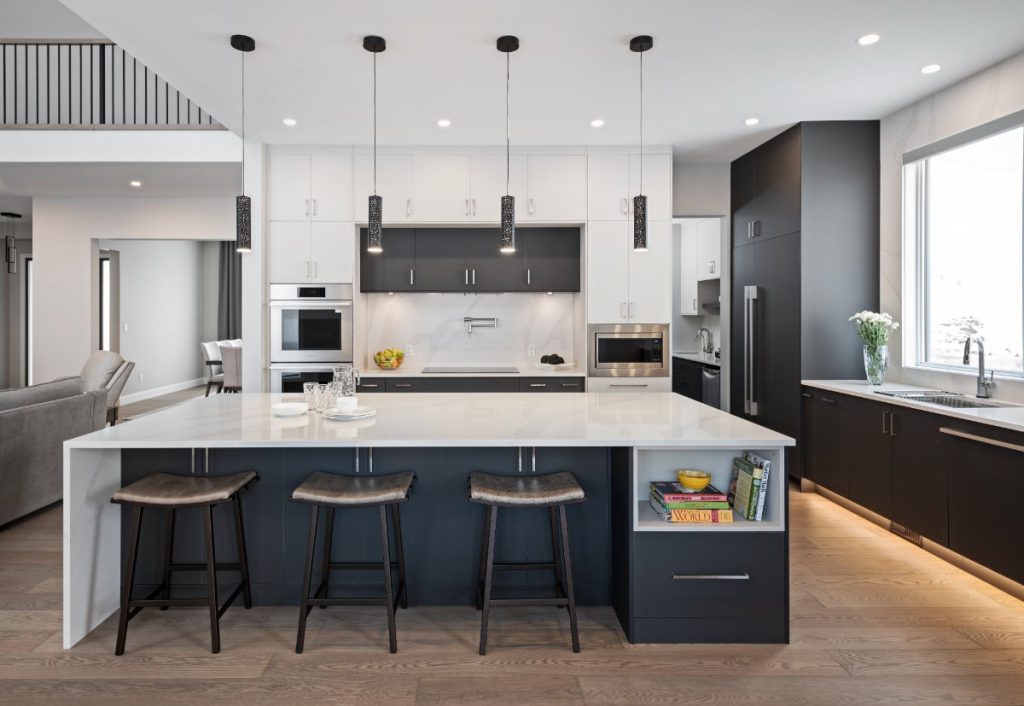
Matching everything has slipped out of fashion, and for good reason; kitchens with varied colours create more visual interest.
Successful combinations pair warm wood with painted neutrals, or use a bold colour—forest green, navy, deep burgundy—on lowers while keeping uppers light and bright. This approach creates natural distinctions in open-concept layouts, defining functional zones through contrast, for example, islands finished in a different tone from the perimeter cabinetry.
The trick is making deliberate choices rather than random ones. Done right, a two-toned design adds dimension that single-colour schemes can’t achieve.
[Book a Free Kitchen Design Consultation]
6. Disappearing Appliances
In recent years, kitchen appliances would boldly announce themselves, often in hard-to-miss stainless steel. In 2026, the trend will be making your fridge and dishwasher magically vanish.
Panel-ready appliances that match surrounding cabinetry are gaining serious traction. This preference reflects the shift toward a kitchen that feels more like a living space and less like a commercial work zone.

This move towards seamless integration extends beyond major appliances. Push-to-open cabinets eliminate visible hardware. Recessed pulls keep lines clean. Flat-panel doors with minimal profile let materials shine.
And when your dishwasher looks like another cabinet and your fridge blends into the wall, suddenly the stone or wood used becomes what you notice first. Function still matters, it just doesn’t dominate the visual landscape.
7. Clever Storage Hides Clutter
No matter how beautiful your kitchen looks, it still has a “job” to do. In 2026, storage innovation and solutions will become more creative and comprehensive. It’s about acknowledging that kitchens serve dual purposes: they’re workspaces where actual cooking happens, and they’re social hubs where people gather.

Appliance garages and pocket doors will hide toasters, coffee makers, and other countertop gadgets. Walk-in and Butler’s pantries—sometimes called “dirty kitchens”—are also making a comeback. These hidden prep zones often include their own sinks and sometimes small cooktops, letting you do the messy work of cooking without cluttering the main space.

8. Natural Stone Across Surfaces

In 2026, stone will claim more territory in kitchens, both literally and figuratively.
Laurysen designers report that rather than small tiles, full stone slabs are taking over walls. This creates seamless surfaces that are easier to clean and more visually striking. Some industry observers are calling 2026 “the year of the countersplash.”
When you pair minimal cabinetry with a bold stone statement—especially one with dramatic veining—the stone becomes artwork. It’s a functional surface that also serves as the kitchen’s main attraction, turning everyday cooking into something that feels a bit more special.
As for materials, natural quartzite ranks just behind engineered quartz in popularity as homeowners seek surfaces with character and variation.
9. Layered Lighting for Depth and Drama

Lighting used to be a kitchen afterthought. In 2026, it’ll be one of the most memorable elements in the room.
Survey data shows 87% of professionals view kitchens as prime spaces for decorative lighting, but the fixtures getting attention aren’t basic pendants or recessed lights.
We’re creating layered approaches that create depth and dimension. Under-cabinet lighting illuminates work surfaces while adding ambient glow. Interior cabinet lighting showcases glassware or creates a soft backdrop. Hanging fixtures—from oversized sculptural pieces to asymmetrical arrangements at different heights—serve as focal points and conversation starters.
Backlighting also plays a particularly powerful role, creating visual depth. When combined with dimmable controls, these layers let you adjust the mood throughout the day—bright and energizing for morning coffee prep, softer and more intimate for evening gatherings.
The right lighting strategy transforms a functional kitchen into something truly exceptional.
Bring These Trends To Your Kitchen
The kitchen trends for 2026 share many common threads: polished, warm and built for real life. Whether you’re drawn to curved islands, natural wood, dramatic stone, or another trend, the goal is to create a beautiful space that works for you.
Thinking about a renovation? Laurysen’s designers know how to take trends like these and adapt them to your specific home, style, and budget. A free consultation costs nothing but an hour of your time, and it might be the first step toward the kitchen you’ve been imagining.